
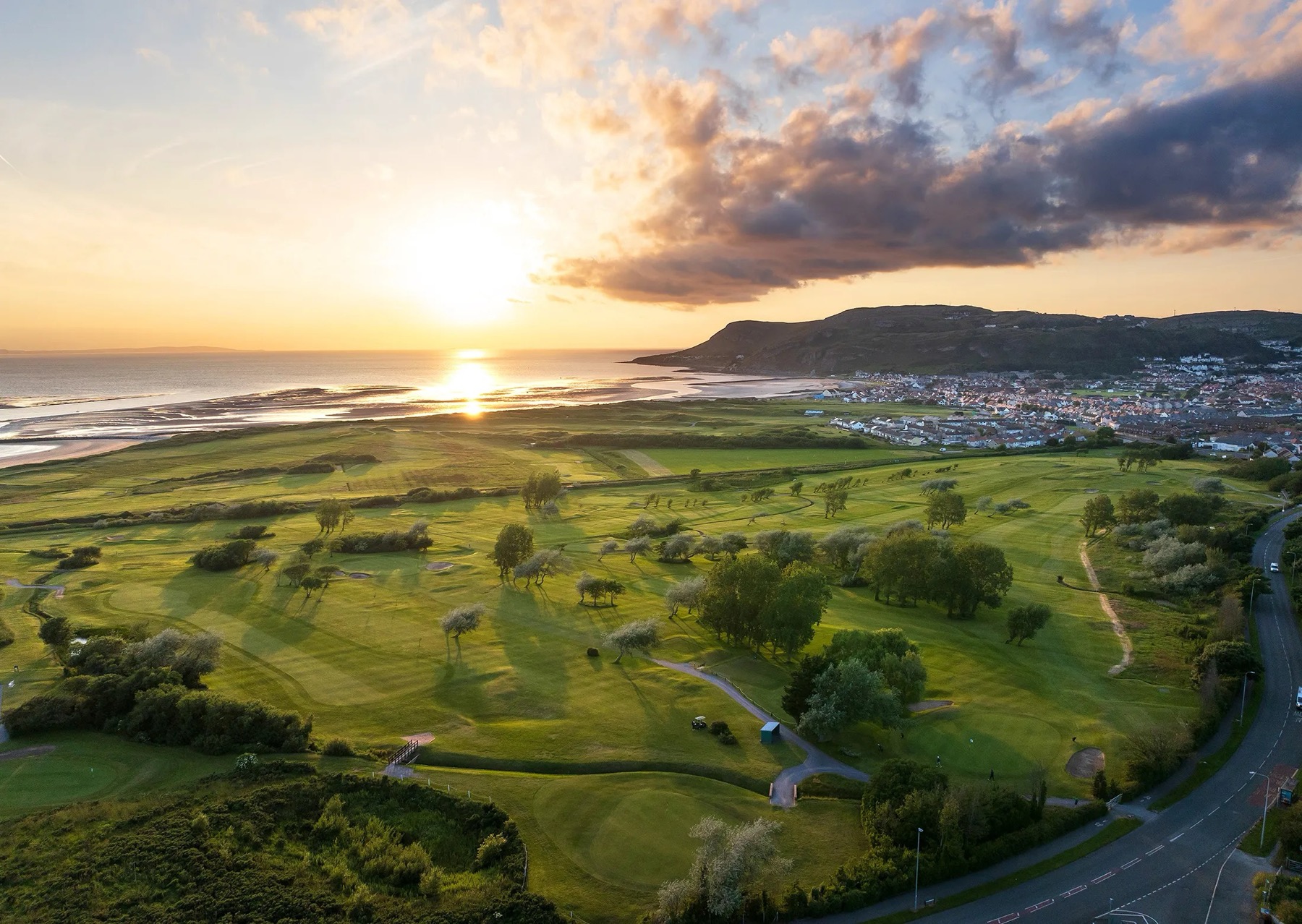
You are not losing on the golf.
You are losing on the telling.
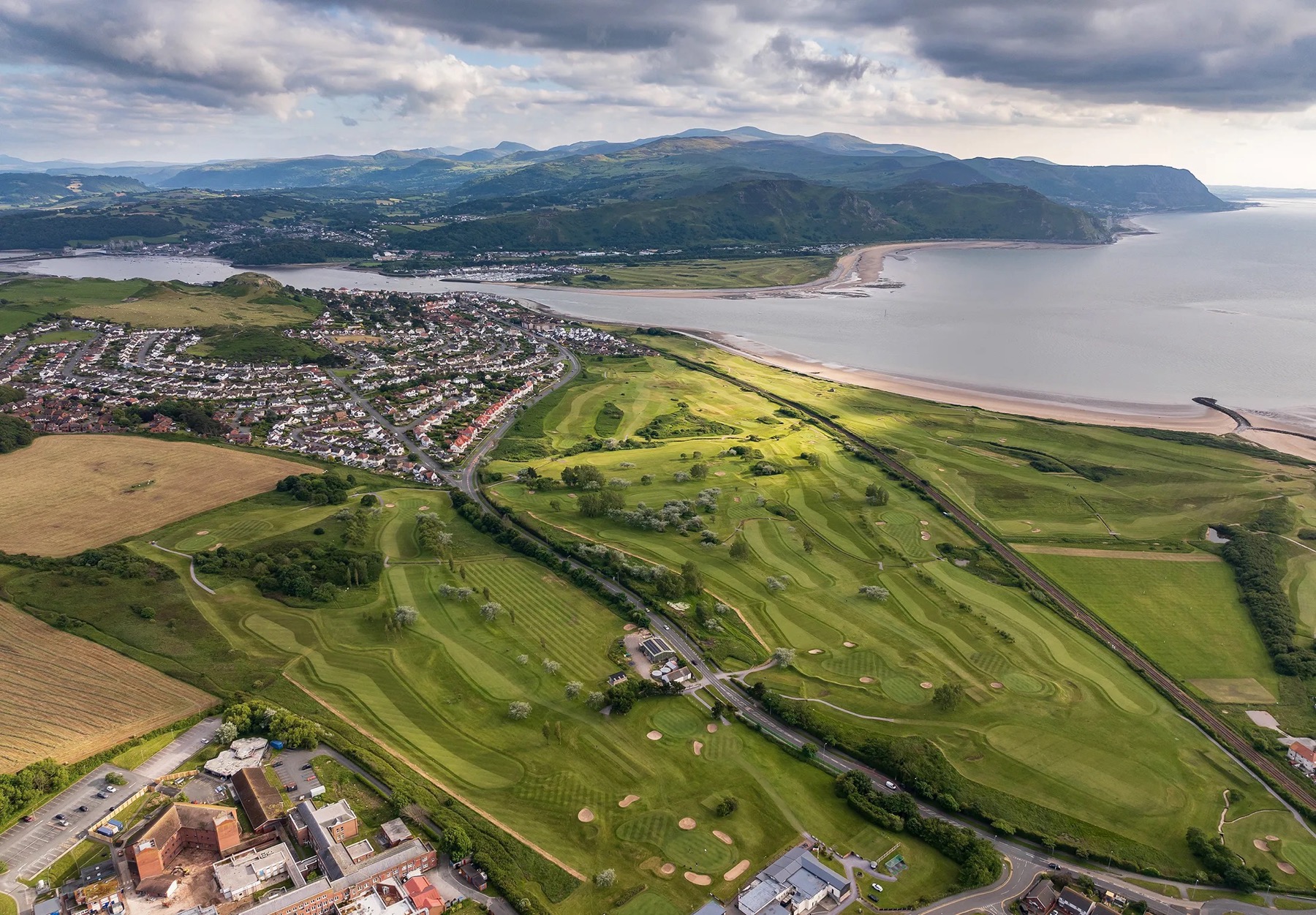
Act oneThe brief
Where we think the club is
Six things we think are true.
If any of these is wrong, the rest of the document is built on sand and we would rather know now. Everything after this follows from them, in this order.
Both sides are underserved
The members are not being talked to often enough, and the visitors are not being reached at all. That is the same missing habit showing up twice, not two separate problems.
Golfers here have not heard of you
Visitors already in North Wales, already booking rounds, name Aberdovey, Nefyn, Conwy and North Wales. Maesdu does not come up, and it is the one course in the town itself.
The logo is the first job
The logo is dated and the club knows it. The full crest keeps its place on the captain’s blazer and in the clubhouse. What is missing is something to put in front of visitors and new members.
Discounting is off the table
The course is worth its price, and the answer to a quiet week is not a cheaper tee time. Nothing in this document trains a visitor to wait for a deal.
Every pound has to be traceable
A board moving from no marketing spend to real marketing spend needs to see what each pound returned. So every line here is priced on its own and measured on its own.
A short sharp start, then momentum
Something visible and new in the near term, then a longer piece that keeps it going. This is written as a first year, not a five-year plan.
One thing we are not proposing is a website. With an integrated tee-sheet supplier in the picture, a new site may well arrive with it. Everything here works on the site you have and on whatever replaces it.
The club in numbers
Six numbers, and one of them is the whole argument.
- 1915James Braid laid out the course on land bought by the town council
- 1938The first Professional Home Internationals were played here
- 6448Yards off the gold tees, par 72, slope 132
- 4.6Out of five on Golfshake, across 35 golfer reviews
- 2015The year still printed on the club’s only logo
- 37Per cent of domestic visitors to Llandudno come from the North West
That last one is the number to build a campaign on. The largest single source of visitors to this town is two hours up the A55, and your green fee is roughly half what the course next door charges.
The verdict from outside
You are not losing on the product.
We read roughly fifty golfer reviews across seven platforms before writing a word of this. The picture is consistent, and it is not the picture of a club with a quality problem.
| Where | Score | What golfers actually say |
|---|---|---|
| GolfPass | 4.7 / 5 | Sixteen reviews, fifteen of them recommend the course. |
| Golfshake | 4.6 / 5 | Thirty-five reviews. No one-star or two-star review in the set. |
| Tripadvisor | 4.6 / 5 | Sixty-two, though these mix golf with weddings and functions. |
| Conwy, for comparison | 4.0 to 4.6 | The course charging up to £190 a round does not score better than you. |
The single dominant theme across every platform, in more than fifteen separate reviews going back to 2008, is the view: Conwy Bay, the Great Orme, Snowdonia, Anglesey. Golfers already know what this place is worth. They just have to get here first.
Conwy already sells Maesdu. Its own golf-breaks page promotes “Golf Coast North Wales”, three rounds from a choice of five courses, and you are one of the five. You are not invisible to the trade. You are invisible to the golfer, and you are never the headline course in anybody’s package.
What is buried
The trophy that professionals still play for was first won here.
In September 1938 this club staged the first Professional Home International Series. Wales was captained by Dai Rees. The trophy presented that week, dented by a wartime bomb blast, was later given to the Professional Golfers’ Association and has been the PGA Cup since 1973. The thing club professionals compete for today was first won at Maesdu.
James Braid laid the course out in 1915. Tom Jones, the club professional, finished the job. Tom Jones’s grandson, Clive Brown, is the serving Captain of the R&A. Amy Boulden, who plays on the Ladies European Tour, grew up here.
Every one of those is on the club’s own history page. None of them is on the homepage, in a page title, or in anything a golfer searching for a round in North Wales would ever see.
Why it matters commercially
- It is verifiable, so it survives contact with a sceptic
- It belongs to this club alone, so no competitor can copy it
- It gives you a date to be proud of that is not 2015
- It justifies a price without discounting, which is the whole constraint
This is the recommended line in your brand guidelines: Where the PGA Cup began.
Where the leaks are
Five things we found on your own site, on 3 September.
We are not selling you a website. We are telling you these because three of them cost you money this week, and two can be fixed by whoever holds the login in under an hour.
| What | What it costs you |
|---|---|
| The visitor information page returns a 404 | The page a green-fee visitor is most likely to click is gone. The diary page also 404s and is still listed in your own sitemap. |
| Two membership prices are live at once | The join page says £880 for 2026. The benefits page still says £850 for 2025. A prospective member can find both in two clicks. |
| The site refuses automated visitors | It returns 403 to bots. That includes the crawlers behind AI assistants, so when somebody asks one where to play near Llandudno, you are not in the answer. |
| No page has a description or a share image | Anything shared to Facebook or WhatsApp appears with whatever the platform can scrape, which is usually nothing. |
| A public page of placeholder text | Your theme’s demo styles page is live and indexable, full of Lorem Ipsum. |
The full list, with the URLs, is in the brand guidelines we have already written for you. Read them here ↗
We will do this properly for £500. Every page checked, every broken link and wrong price listed with the exact fix, titles and descriptions written for the pages that have none, the bot block diagnosed, and a list of the sections the site is missing with the copy to fill them. It is a document your webmaster can work through, or hand to whoever builds the next site. If you would rather we made the changes ourselves, that is £75 an hour and you only pay for the hours used.
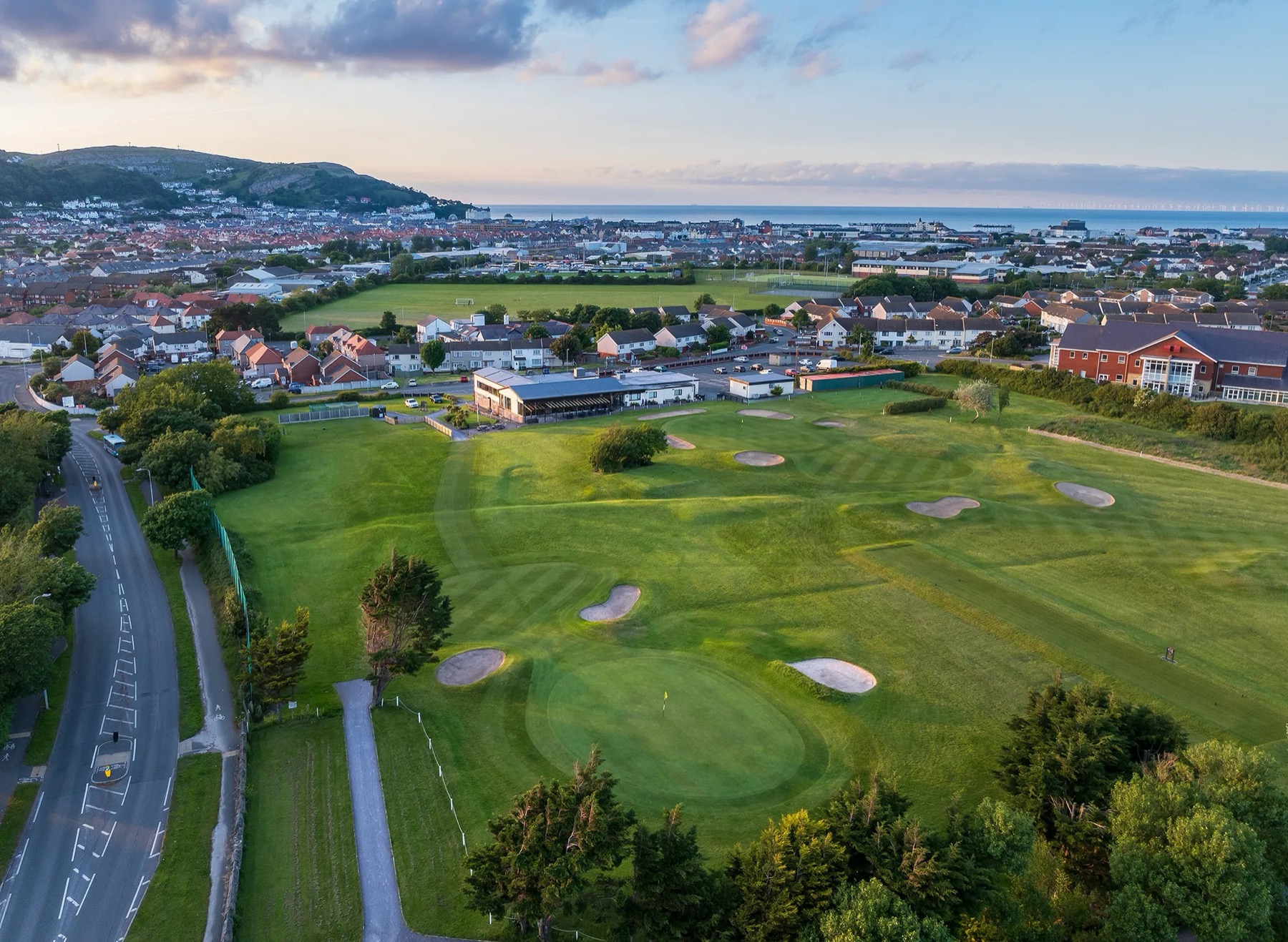
Act twoThe proposal
Four things, in this order
The logo. The visitors. The follow-up. The emails.
A list of services with prices against them, so the board can decide what to take. Each of the four stands on its own and can be bought on its own. They are in the order we would do them, and each one makes the next one worth more.
The logo
A logo the club can put in front of visitors and new members, without touching the captain’s blazer.
£2,500The visitors
Two managed campaigns a year, aimed at the North West and at societies. No discounting.
£3,000 eachThe follow-up
One place where every enquiry lands and gets chased, instead of a tee-sheet used as a filing cabinet.
From £151 a monthThe emails
Email Studio, so every send looks like the club, plus the option of us writing them.
Included, or £175 a monthOne · The logo
Your only logo is a birthday badge, and the birthday was eleven years ago.
The logo in your website header, on the phone icon and on the caps in the pro shop reads 1915, 2015 and 100 YEARS. It was made for the centenary. It is now 2026. There is no version without the dates, none that works on a dark background, none in a single colour for embroidery, and no simplified icon. We checked the favicon folder, which is where an undated version usually hides. There isn’t one.
What we would make
The good news is that this is an edit, not a commission.
Your logo is not a picture file. It is a vector drawing of 114 paths sitting inside your website theme, with the colours set on the paths. That means the club already owns clean master artwork that can be blown up to any size for a sign, a flag or embroidery. Most clubs have nothing of the kind. It also means removing the centenary ribbon is an edit to a file you already have. A designer opens it, deletes the lower ribbon and the two dates, and closes the wreath.
We would not charge you five thousand pounds to redraw something you already own. Here is the actual job.
| Deliverable | What it is for |
|---|---|
| The undated crest | The centenary ribbon and the two dates removed, the wreath closed. The logo you use from now on. |
| The full set of versions | One that works on a dark background, one in a single colour for embroidery and engraving, and a simplified icon small enough to read as an app tile. |
| A cleaner logo for the outside world | A simpler, more modern version for the website, adverts, social media and the pro shop. The full crest stays for club business. |
| Colour, type and voice | Already written and already yours, whatever you decide about the rest of this document. |
| Application artwork | Scorecards, signage, menus, staff shirts and pro-shop stock, supplied as print-ready files so you roll them out as stock runs down. |
| The member consultation | A short presentation and a member survey, so the change is put to the membership rather than announced to it. |
The captain’s blazer keeps the old crest. That was your commitment to the board and nothing here changes it. The full crest stays for the blazer, the honours boards and club business. The new logo is for the outside world.
Every pound spent on campaigns spends better afterwards.
A better logo helps pro-shop sales, but the bigger effect is on everything else in this document. A campaign carries the logo. An email carries the logo. The first thing a golfer from Cheshire sees is the logo. Doing the campaigns first means paying to put a 2015 birthday badge in front of every golfer the campaign reaches.
Your own pro-shop stock, carrying the centenary crest.

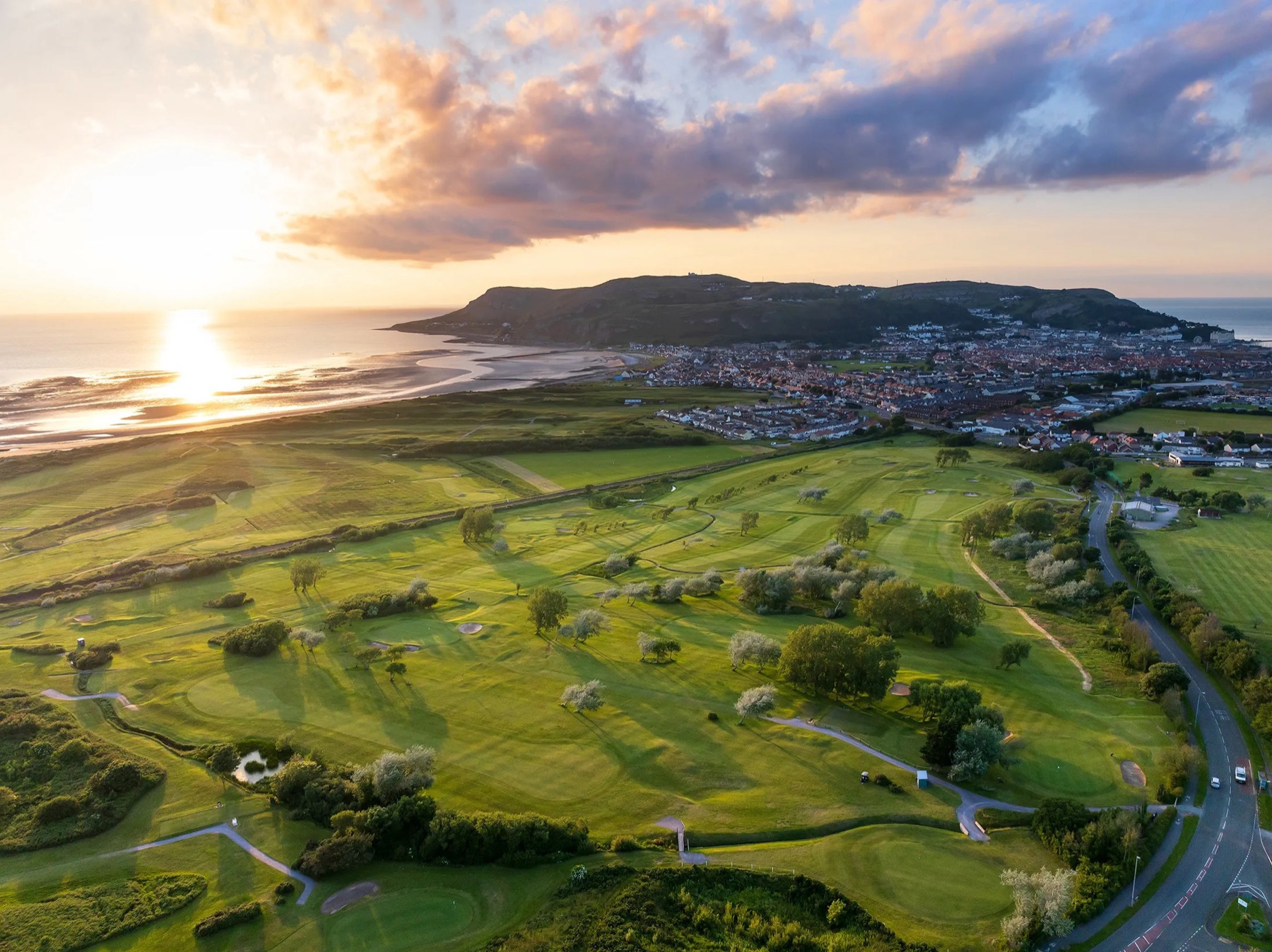
Sell the view and the round. Never the discount.
Two · The visitors
One for the winter. One for the societies.
Both of the campaigns below are lead-generation campaigns: a managed three-month run with its own landing page, audience, creative and tracking, so every enquiry is captured and you can see what it cost. A lighter link-clicks campaign at £1,500 drives traffic rather than capturing enquiries, and is in the menu if you want awareness on top. We recommend two a year to begin with, not four. You are moving from nothing to something, and two is enough to prove the return before the board is asked for more.
The North West, for winter and shoulder golf Lead generation · £3,000
The numbers back this one hard. Thirty-seven per cent of domestic visitors to Llandudno come from the North West. It is two hours from Cheshire and Merseyside, your winter weekday fee is £45, and the course drains well enough to play close to year round. This campaign runs into the quiet months and sells the view, the drive and the round. It is the fastest thing here to put live.
Societies and groups, for spring Lead generation · £3,000
The club is quiet and groups are welcome. A society organiser books once and brings sixteen to forty players, often more than once a year. This campaign targets organisers, captures the enquiry with the date and the numbers on it, and puts it somewhere it will be chased. It runs from January so the spring and summer diary fills.
What we would not run
No discount campaigns, no cheap tee-time dumping, and nothing that trains a visitor to wait for a deal. We agree with the club on this. The argument is that a round here is worth what you charge, against a course next door charging up to £190.
Advertising spend is separate and is yours. It goes straight to Meta on your own card, from about £300 a month while a campaign is live. We never take a margin on your media, and you can turn it up or down whenever you like.
Three · The follow-up
Your tee sheet is being used as a filing cabinet.
The visitor contacts live in BRS because you can email from there, and that is where they stay. A tee sheet records who booked. It does not tell you who enquired and never came, which societies came last year and have not rebooked, or who is worth a call in January. So the campaigns above would pour enquiries into a bucket with a hole in it.
| Today | With Capture |
|---|---|
| An enquiry arrives by phone or form | It lands in one place the moment it arrives, on its own pipeline, with a named owner and a due date. |
| Somebody remembers to reply, or does not | An acknowledgement goes out in seconds and a follow-up sequence runs until somebody answers. |
| A missed call is a lost enquiry | A missed call sends an automatic text back, which is the single cheapest recovery in the whole system. |
| Society contacts are in a tee sheet and a few inboxes | One database, segmented, that you own and that grows every time a campaign runs. |
| Nobody can say what a booking cost to win | Every enquiry carries its source, so the board sees cost per enquiry and cost per booking. |
Capture is the CRM the rest of this runs on. It was built for golf clubs, so societies, green fees, membership and functions are already in it as enquiry types rather than something we have to configure from a blank page.
The first job is your existing data. We audit what is in BRS and in the inboxes, bring it into one place, segment it into hot, warm and cold, and run a re-engagement campaign to the people who already know Maesdu. Those people are the fastest and cheapest revenue on the table, and reaching them builds the list everything else then runs on.
Four · The emails
Regular emails, that look like the club.
The members are not hearing from the club often enough, and the visitor list is sitting there unused. Both are the same fix: something worth sending, sent regularly, to a list you own. It is the cheapest revenue in this document because you are not renting the audience from anybody.
Capture Email Studio
Email Studio is the tool your team writes in. It is loaded with the club’s own brand, so a member newsletter, a society follow-up or a winter offer comes out looking like Maesdu rather than like a generic email platform. Nobody has to fight a template or hunt for the right shade of gold.
It checks a send before it goes: images hosted properly, the structure a mailbox provider expects, and a deliverability score you have to pass. That matters more than design. An email that lands in spam is not a cheap email, it is a wasted list.
Email Studio is part of Capture. There is no separate licence for it.
Three ways to run it
- We do it. We write, design and send, and report on what it did. Two a month at £175, four a month at £325.
- We do it with you. You brief it in a line, Email Studio drafts it in the club’s voice from the knowledge base, your team edits and sends.
- We train you. One session, then it is yours. This is included whichever of the three you pick.
A one-off email, for an open day or a winter offer, is £95.
| Send | To whom | What it is for |
|---|---|---|
| Members, monthly | The membership | The one that is missing today. Course news, the greens plan, fixtures, the bar and food, competition results. |
| Visitors, quarterly | Everyone who has played or enquired | Come back. Seasonal rates, the view in autumn, winter golf that is actually playable. |
| Societies, twice a year | Organisers who have booked or asked | Are you planning your day? Sent in January and again in July, which is when organisers decide. |
| Re-engagement, once | The cold list from BRS | The first send after the audit, to people who already know the club and have not been contacted in a long time. |
On the site you already have
The Concierge answers when the office is shut.
Most golf enquiries arrive in the evening and at the weekend. The Concierge sits on your existing website, answers on green fees, the course, societies, membership and the dress code, and captures the enquiry into Capture while the person is still interested. It reads from a knowledge base we build with you, so it says what the club says.
What does a round cost on a Saturday in October?
Autumn weekend green fees at Maesdu are £45 a round. The course is open all year and drains well, so October is one of the best months to play here, with the Great Orme and Conwy Bay in view from most of the front nine. Would you like me to check availability?
Do you take societies of about twenty?
Yes, we welcome society and group bookings and twenty is a comfortable number. Can I take your name, the date you have in mind and a contact number, and Gareth will come back to you with a package?
Captured as a society enquiry, opened on the societies pipeline, and Gareth is notified.
It runs free for thirty days, on your current site, with no card. If it has not earned its keep by then, it comes off and costs nothing. A voice version that answers the phone can be added later, and we would not add it until the chat version has proved itself.
What we are not selling you
Not a website.
We build golf club websites, and it is the obvious thing for an agency to put in front of you. We are not putting it in front of you, because with an integrated tee-sheet supplier in the picture a new site may well arrive with it. Selling you a website now would either waste your money or block that deal.
What we will do is tell you exactly what is wrong with the site you have, for £500, because some of it is costing you enquiries this week and most of it is an hour’s work. That list is worth having whether the next site is ours, theirs or nobody’s.
So everything in this proposal is designed to be independent of the site. The campaigns run to landing pages we host. The Concierge layers onto whatever is there. Capture catches the enquiries wherever they come from. If you move to a new platform next year, none of this has to be rebuilt, and the logo, the guidelines and the database all move with you because they are yours.
If the new platform lands and you want the site done properly, we will quote for it then, and we will tell you honestly whether their included site is good enough that you should not pay us at all.
Act threeInvestment
Two ways in, and we would be happy with either.
Going from no marketing spend to a real number is a large step for any board, so here is the smaller version as well as the one we would recommend. Both start with the logo, because everything after it carries the logo.
The logo, one lead-generation campaign, and somewhere for the enquiries to land. Enough to prove the return before asking the board for the rest.
- The logo and rollout£2,500
- One lead-generation campaign£3,000
- Capture setup£795
- Capture, twelve months£1,812
- Concierge, twelve months£828
- Email Studio and trainingincluded
Both lead-generation campaigns, and the database rebuilt before either of them runs, so the list you already own is working from month one.
- The logo and rollout£2,500
- Two lead-generation campaigns£6,000
- Capture setup£795
- Capture, twelve months£1,812
- Data audit and rebuild£950
- Concierge, twelve months£828
- Email Studio and trainingincluded
The website audit and fix list. Not a new site, just an exact account of what is broken on the one you have and what to do about it.
- Website audit and fix list£500
- We make the fixes instead£75 an hour
- Two managed emails a month£175 a month
- Four managed emails a month£325 a month
Advertising spend sits on top and is yours. Two three-month campaigns at £300 a month is about £1,800 across the year, paid directly to Meta. It is the one number in this document you can change whenever you like, in either direction.
Four and a half rounds a week.
The board’s question is what it takes to get the money back, so here it is in the units you count every day. Your published 2026 green fees run from £35 to £90, so call an average visitor round £55.
- 234Extra visitor rounds at £55 to cover the recommended year in full
- 4.5Which is four and a half extra rounds a week, across a year
- 15Or fifteen society days of twenty players, before a penny of food and bar
That is the whole programme, not the marginal cost of one campaign. And it counts only new visitors. It ignores the members who stay because the club finally talks to them, the societies who rebook because somebody followed up, and the pro-shop stock that stops carrying a date that has passed.
Some of this is not new revenue at all. The database work reaches people who have already played here and already liked it. That is money that has already walked through the door once and was never asked to come back.
Straightforward, and nothing buried.
Commitment
Capture runs on a twelve-month initial term, then rolls monthly with thirty days’ notice. Campaigns are bought one at a time and there is no obligation to buy the second. The logo is a one-off piece of work with no ongoing fee attached to it.
Payment
The logo is invoiced half on go-ahead and half on delivery. Capture setup is invoiced on signature. Campaigns are invoiced at the start of each three-month run. Everything else is monthly or annual as marked.
What stays exactly as it is
- Your website, until you decide otherwise
- BRS, and whatever replaces it
- Club V1 and your membership records
- The captain’s blazer and the full crest on it
- Your advertising budget, on your own card
Everything we build is yours: the artwork files, the guidelines, the database and the contacts in it. If you stop working with us, you keep all of it.
This proposal is valid for thirty days from 4 September 2026.
A yes, a no, or a conversation about the shape of it.
Read the brand guidelines first
They are already live and they cost you nothing. They will tell you more about whether we understand this club than this proposal will.
Tell us which lines you want
Take one, take all of them, or tell us the number the board will approve and we will tell you honestly what fits inside it.
The logo and the Concierge can start immediately
The Concierge runs free for thirty days on your current site, so you can see it working before anything is signed. The logo takes about three weeks to first drafts.